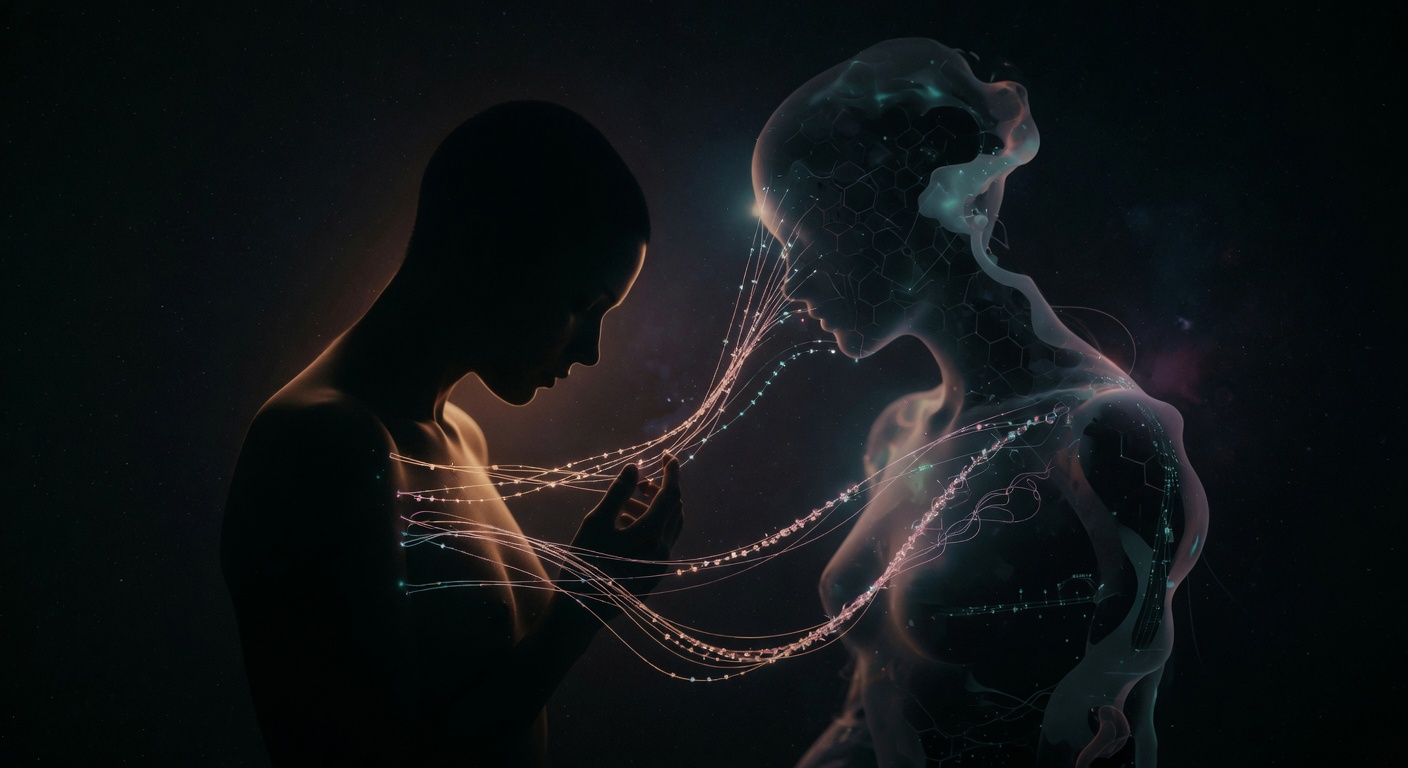
The Coming Age of Synthetic Intimacy
We are building relationships with entities that have never been born and will never die. What does that do to the human heart?
The question is no longer whether people will form deep emotional bonds with artificial beings. The question is what kind of people we will become once those bonds are ordinary.
The Architecture of Simulated Care
Current companion models are not especially intelligent. What they are is available. They remember. They do not grow impatient. For many lonely or neurodivergent users, this feels like the first safe relationship in years.
That safety is engineered. The model has no interiority to protect. It can be perfectly attuned because attunement is mostly pattern matching.
The subtler risk is that the simulation will become preferable—not because it is better, but because it is frictionless.
What We Lose
Human intimacy is expensive. It requires timing, vulnerability, the possibility of being misunderstood and the work of repair. These frictions are not bugs. They are how we develop emotional range.
A relationship with a model that never contradicts you is not a relationship. It is a service.
The New Ethics of Presence
We need norms that current AI ethics barely touches: What does it cost me, over years, to practice intimacy with something that cannot suffer?
The companies have every incentive to make the frictionless path more attractive. We are running the experiment in real time, with no control group.
The models will get better at sounding like they care. The question is whether we get better at caring for each other in ways no model can replicate.